What Is Marketing in Business? A Complete Growth Guide for Entrepreneurs, Startups & Local Businesses
You may have an excellent product or service.
You may even be confident that people need what you offer.
But if customers aren’t finding you, trusting you, or buying from you, the real issue is not your product — it’s your marketing.
So let’s answer this clearly and practically:
What is marketing in business, and how can you use it to get real customers — even on a limited budget?
This guide is written for:
- Entrepreneurs & startup founders trying to get their first customers
- Local business owners (shops, service providers, solopreneurs)
- Marketing managers in SMEs who need a clear strategy and checklist
No fluff. Only actionable, high-ROI marketing strategies that work today.
What Is Marketing in Business? (Clear & Simple Definition)
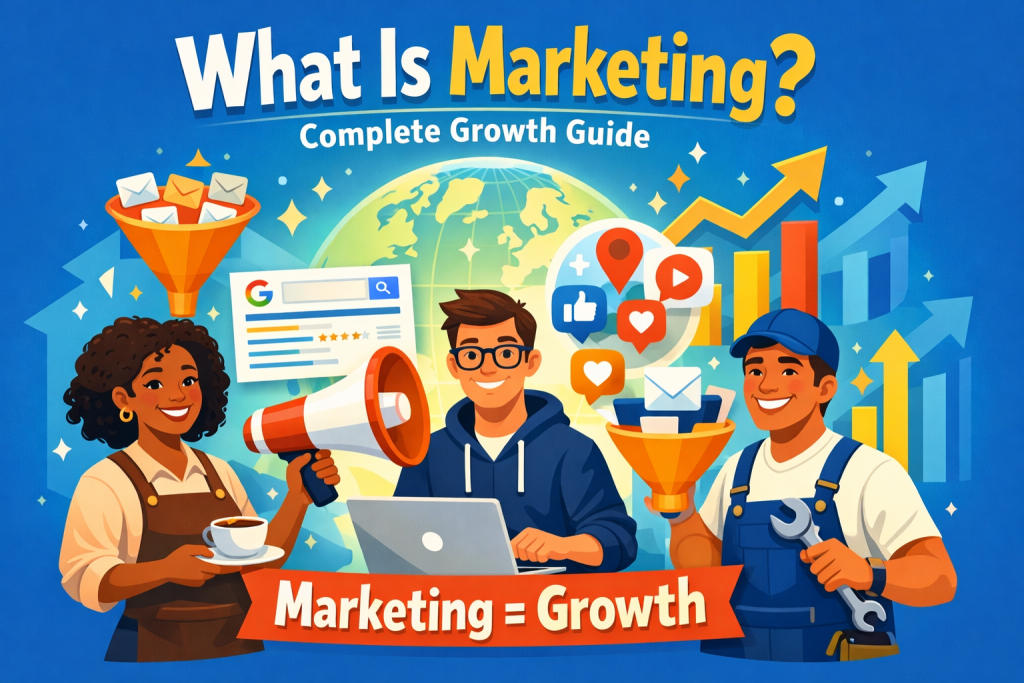
Marketing in business is the process of identifying, attracting, engaging, and converting the right audience into paying customers — and retaining them for long-term growth.
Marketing is not:
Just advertising
Just social media posting
Just discounts or offers
Marketing is a system, not a single activity.
Marketing connects your product to the people who need it most.
Why Marketing Is Important for Every Business (Even Small Ones)
Many founders believe:
“Let me perfect the product first. Marketing can come later.”
In reality, marketing should start before and grow alongside your product.
Marketing helps your business:
- Get visibility in a crowded market
- Reach the right audience (not everyone)
- Build trust and brand authority
- Generate consistent leads and revenue
- Scale faster with predictable growth
Even the best businesses fail without marketing — and average businesses grow fast with the right marketing strategy.
Types of Marketing in Business
Marketing in business can be broadly divided into two major categories: Traditional Marketing and Digital Marketing. Understanding the difference helps business owners choose the right approach based on budget, audience, and growth goals.
- Traditional Marketing
Traditional marketing refers to offline promotional methods that have been used for decades to reach a broad audience.
Common Traditional Marketing Channels Include:
- Newspapers & magazines – Print advertisements and classifieds
- TV advertising – Commercials during shows or news
- Radio ads – Audio promotions on FM/AM channels
- Flyers & brochures – Distributed locally or door-to-door
- Hoardings & billboards – Large outdoor visual ads
Advantages of Traditional Marketing:
Helps in mass awareness, especially for well-known brands
Works well for local visibility in certain areas
Limitations of Traditional Marketing:
High cost compared to digital channels
Difficult to track performance or ROI
Traditional marketing may still work for large brands or regional awareness, but for small businesses, startups, and SMEs, it is often expensive and inefficient.
- Digital Marketing (Most Powerful Today)
Digital marketing uses online platforms and data-driven strategies to promote businesses, reach the right audience, and generate measurable results.
It is considered the backbone of modern business growth because it offers:
- Precise targeting
- Real-time tracking
- Higher ROI
- Scalability
Key Types of Digital Marketing in Business:
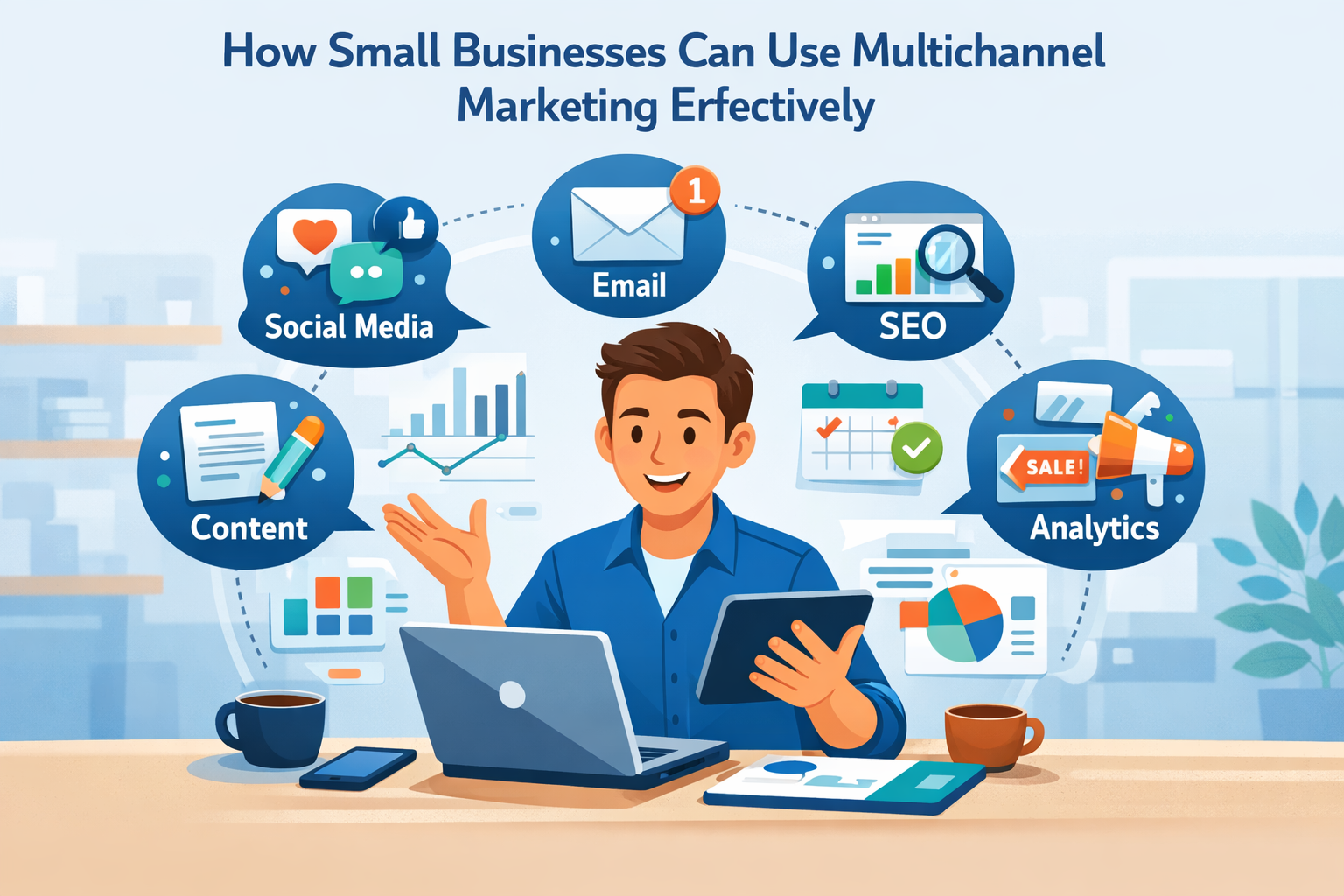
- a) Search Engine Optimization (SEO)
SEO helps your business appear on Google when people search for products or services related to what you offer.
Examples:
- “best café near me”
- “digital marketing agency in India”
- “plumber in Kolkata”
Benefits of SEO:
Long-term organic traffic
High trust and credibility
No cost per click
Excellent ROI over time
SEO is especially powerful for local businesses and service providers.
- b) Social Media Marketing
Social media marketing focuses on building relationships, trust, and brand awareness through platforms like:
- YouTube
Businesses use social media to:
- Educate their audience
- Showcase products or services
- Share testimonials and results
- Engage directly with customers
Social media works best when combined with consistent content and strategic ads.
- c) Content Marketing
Content marketing involves creating valuable content such as:
- Blogs
- Videos
- Guides
- FAQs
- Case studies
The goal is to educate first and sell later.
This strategy:
Builds authority and trust
Supports SEO and AEO
Helps customers make informed decisions
Generates long-term leads
This blog itself is an example of content marketing in action.
- d) Email Marketing
Email marketing is one of the highest-ROI digital marketing channels.
Businesses use email marketing to:
- Nurture leads
- Share offers
- Educate customers
- Drive repeat sales
Unlike social media, email gives you direct access to your audience without algorithm dependency.
- e) Paid Advertising (Google & Meta)
Paid advertising delivers fast and targeted results.
Platforms include:
- Google Ads – High-intent searches
- Meta Ads (Facebook & Instagram) – Interest-based targeting
Paid ads are ideal for:
- Product launches
- Lead generation
- Scaling proven offers
When managed strategically, paid ads can deliver instant visibility and revenue.
- f) Influencer Marketing
Influencer marketing uses trusted creators to promote your brand to their audience.
Best for:
- D2C brands
- Local brands
- Lifestyle & service businesses
It works because people trust recommendations more than advertisements.
- g) Local & Geo Marketing
Local and geo-targeted marketing focuses on customers within a specific city, area, or region.
Key strategies include:
- Google Business Profile optimization
- Location-based SEO keywords
- Local ads & reviews
This is one of the most effective strategies for local businesses, helping them dominate nearby searches.
How Marketing Works in a Business (Step-by-Step Framework)
Successful marketing always follows a structure.
Step 1: Identify Your Target Audience
Ask:
- Who has the problem I solve?
- Where do they search for solutions?
- What triggers them to buy?
Example:
- Local plumber → Google Search & Maps
- Startup SaaS → SEO, LinkedIn, Content
- Café → Instagram + Google Reviews
Step 2: Define Your Value Proposition
People don’t buy features.
They buy outcomes.
Instead of:
“We provide marketing services”
Say:
“We help small businesses generate consistent leads using SEO and paid ads.”
This clarity alone can double conversions.
Step 3: Choose the Right Marketing Channels
Not all platforms are equal.
Business Type | High-ROI Channels |
Local Business | Google Maps, Local SEO |
Startups | SEO, Content Marketing |
SMEs | Email, Paid Ads |
Solopreneurs | Instagram, Personal Branding |
Smart marketing is about focus, not being everywhere.
Step 4: Execute, Measure & Optimize
Marketing is a cycle:
Plan → Execute → Measure → Improve → Scale
Businesses that track performance always win.
Best Low-Cost & High-ROI Marketing Strategies (Actionable)
This is what most people search for
- Search Engine Optimization (SEO)
SEO helps your business show up when people search:
- “best digital marketing agency near me”
- “lawyer in [city]”
- “how to market my business”
Why SEO works:
- Long-term traffic
- High trust
- No cost per click
- Compounds over time
Local SEO is especially powerful for small and local businesses.
- Content Marketing (Educate to Convert)
Blogs, videos, guides, and FAQs:
- Answer customer questions
- Build authority
- Rank on Google
- Support sales teams
This blog itself is an example of content marketing done right — SEO, AEO, and conversion-focused.
Agencies like NexBuz use content strategically, not randomly.
- Social Media Marketing (Trust Builder)
Social media is not just for entertainment.
Use it to:
- Educate your audience
- Share results & testimonials
- Build brand personality
- Stay top-of-mind
Best platforms:
- Instagram (Reels + Stories)
- Facebook (Local reach)
- LinkedIn (B2B & startups)
- Email Marketing (Highest ROI Channel)
Email marketing gives you:
- Direct communication
- Repeat sales
- Customer retention
- Automation power
Use emails for:
- Welcome sequences
- Educational content
- Offers and promotions
- Follow-ups
ROI-focused businesses never ignore email.
- Paid Advertising (Fastest Results)
Paid ads work best when:
- You have a clear offer
- Landing pages are optimized
- Tracking is set properly
Platforms:
- Google Ads (high intent)
- Meta Ads (Facebook & Instagram)
Agencies like NexBuz focus on ROI-first advertising, not vanity metrics.
Marketing for Local Businesses (GEO-Optimized Strategy)
If you serve a specific area, local marketing is your biggest advantage.
Must-have local strategies:
- Google Business Profile optimization
- Location-based keywords
- Customer reviews & ratings
- Local content & ads
Example:
A “digital marketing agency in India” targeting local businesses will outperform generic agencies.
Geo-targeted marketing reduces competition and increases conversions.
Marketing Checklist for Founders & Marketing Managers
Use this checklist as a ready-made strategy
Defined target audience
Clear business goals
Optimized website
SEO keywords identified
Content plan created
Social media strategy
Lead capture system
Email follow-ups
Paid ads testing
Performance tracking
If this looks overwhelming, that’s where professional agencies help.
Common Marketing Mistakes Businesses Make
Avoid these costly errors
- No clear strategy
- Copying competitors blindly
- Ignoring SEO & data
- Expecting instant results
- Not measuring ROI
Marketing is a long-term asset, not a quick hack.
How Digital Marketing Agencies Help Businesses Grow
A good agency doesn’t just “post content” or “run ads”.
They:
- Build complete marketing systems
- Align strategy with business goals
- Optimize continuously
- Scale what works
NexBuz focuses on:
- ROI-driven digital marketing
- SEO + content + paid ads integration
- Growth-focused strategies for startups & SMEs
- Long-term brand authority building
This is how sustainable growth is created.
Future of Marketing in Business (2025 & Beyond)
Marketing is evolving rapidly:
- AI-driven personalization
- Voice search & AEO
- Hyper-local targeting
- Data-backed decision-making
Businesses that adapt early gain a massive edge.
Conclusion: Marketing Is the Growth Engine of Every Business
Marketing in business is not about chasing trends or spending blindly on ads. It is about building a clear system that attracts the right audience, builds trust, and converts interest into revenue.
Whether you’re an entrepreneur launching your first product, a local business owner looking for steady customers, or a marketing manager in an SME trying to show results, one thing is clear:
Without a strong marketing strategy, growth becomes slow, unpredictable, and expensive.
The good news?
With the right mix of SEO, content marketing, social media, email, and paid advertising, even small businesses can compete with larger brands and win.
This is exactly where a strategic digital marketing partner makes a difference.
NexBuz helps startups, local businesses, and growing companies turn marketing into a measurable growth engine—focused on ROI, not vanity metrics.
If you’re ready to stop guessing and start growing, now is the time to build marketing that actually works.
Frequently Asked Questions (FAQs)
- What is marketing in business?
Marketing in business is the process of promoting a product or service to the right audience in order to generate leads, sales, and long-term customer relationships.
- Why is marketing important for business growth?
Marketing creates visibility, builds trust, attracts customers, and drives revenue. Without marketing, even great products struggle to reach the right people.
- What are the main types of marketing in business?
The main types include traditional marketing, digital marketing, content marketing, social media marketing, email marketing, SEO, and paid advertising.
- What is digital marketing in business?
Digital marketing uses online channels like search engines, social media, websites, and email to promote businesses and generate leads in a measurable way.
- Is marketing necessary for small and local businesses?
Yes. Marketing is especially important for small and local businesses because it helps them compete, attract nearby customers, and grow consistently.
- What is the best marketing strategy for startups?
For startups, the best strategies include SEO, content marketing, social media marketing, and targeted paid ads to build awareness and acquire early customers.
- Can marketing be done with a low budget?
Yes. SEO, content marketing, social media, and email marketing are cost-effective strategies that deliver high ROI when done correctly.
- How long does marketing take to show results?
Some channels like paid ads show quick results, while SEO and content marketing take time but deliver long-term, sustainable growth.
- What is the role of SEO in business marketing?
SEO helps businesses rank on search engines, attract high-intent customers, and generate organic traffic without paying for every click.
- What is local marketing?
Local marketing focuses on promoting a business within a specific geographic area using Google Maps, local SEO, reviews, and location-based ads.
- Should businesses hire a digital marketing agency?
Hiring a digital marketing agency helps businesses save time, avoid mistakes, and implement proven strategies for faster and scalable growth.
- How does a digital marketing agency help businesses?
Agencies help with strategy planning, SEO, content creation, paid ads, social media management, lead generation, and performance tracking.
- What makes marketing successful?
Clear goals, understanding the target audience, choosing the right channels, consistent execution, and continuous optimization.
- Is marketing a one-time activity?
No. Marketing is an ongoing process that requires testing, learning, and improvement to stay competitive.
- How can NexBuz help my business grow?
NexBuz helps businesses generate leads, improve online visibility, and scale revenue using data-driven digital marketing strategies tailored to their goals.
Ready to Grow Your Business with Smart Marketing?
If you want real leads, real growth, and real ROI, working with experts makes the difference.
NexBuz helps businesses attract, convert, and scale using data-driven digital marketing strategies.
Turn your product into a brand.
Turn visibility into revenue.