A Complete, Practical Marketing Guide for Founders & Entrepreneurs
Starting an online startup is exciting. You have an idea, a product, or a service that solves a real problem. But very soon, one big question starts bothering you:
“How do I market my online startup business and get my first customers?”
This is one of the most common challenges faced by:
- Startup founders launching a new product
- Entrepreneurs bootstrapping their business
- Local business owners going digital
- SME marketing managers under pressure to deliver growth
The good news?
You don’t need a massive budget or a large marketing team to grow your startup.
What you need is a clear, structured, high-ROI marketing system.
In this guide, we’ll walk you through exactly how to market an online startup business, step by step, using proven digital marketing strategies that work in 2025 and beyond.
What Is the Best Way to Market an Online Startup Business?
Short answer:
Focus on clarity, consistency, and channels with the highest return on investment.
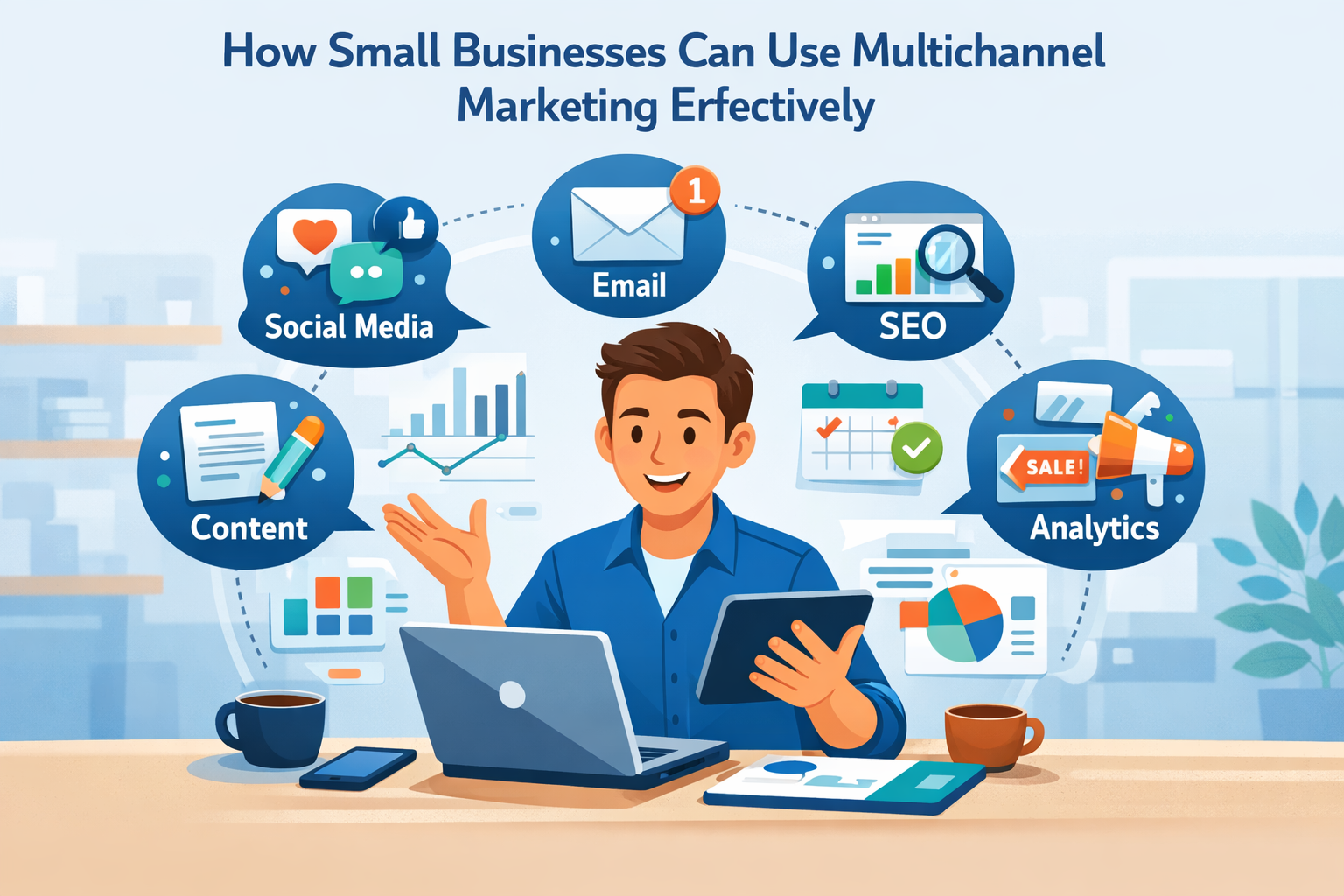
The best startup marketing strategy combines:
- A conversion-focused website
- SEO for long-term growth
- Social media for visibility and trust
- Paid ads for quick traction
- Email marketing for nurturing and conversions
Let’s break this down in a simple, actionable way.
Step 1: Define Your Target Audience (This Is Non-Negotiable)
Before running ads, posting on social media, or writing blogs, you must clearly understand who you’re marketing to.
Ask yourself:
- Who is my ideal customer?
- What problem are they actively trying to solve?
- What is stopping them from buying right now?
- Where do they spend time online?
Example:
- A B2B SaaS startup → Google Search, LinkedIn, Email
- A local service business → Google Maps, SEO, WhatsApp
- A D2C brand → Instagram, Facebook, Influencer marketing
Big mistake startups make:
Trying to market to “everyone.”
Successful startups market to one clear audience first, then expand.
Step 2: Build a Website That Converts Visitors into Leads
Your website is not a brochure.
It is your main sales and lead generation asset.
A good startup website should:
- Explain what you do in 5 seconds
- Clearly state who it’s for
- Highlight benefits, not just features
- Guide users toward a clear action
Must-Have Elements on a Startup Website:
- Strong headline with value proposition
- Clear call-to-action (CTA)
- Trust signals (testimonials, logos, reviews)
- Simple navigation
- Fast loading speed (critical for SEO)
Essential Pages:
- Home
- Services / Product
- About Us (trust builder)
- Contact / Lead Form
- Blog (for organic traffic)
Pro tip:
If your website traffic is increasing but leads are not, the problem is conversion, not marketing.
Step 3: Use SEO to Get Free, High-Intent Traffic
Search Engine Optimization (SEO) is one of the most powerful and cost-effective marketing channels for startups.
Why SEO Is Perfect for Startups:
- No cost per click
- Brings people actively searching for solutions
- Builds long-term authority
- Compounds over time
How Startups Should Do SEO:
Instead of targeting high-competition keywords, focus on:
- Long-tail keywords
- Question-based searches
- Problem-specific queries
Examples:
- “How to market an online startup business”
- “Best digital marketing strategy for startups”
- “How to get first customers for a startup”
- “Affordable digital marketing agency for startups”
GEO SEO (For Local & Service Businesses):
If you serve a specific location:
- Optimize Google Business Profile
- Use city + service keywords
- Collect customer reviews
- Add location pages
Example:
“Digital marketing agency for startups in India”
Step 4: Create Content That Answers Real Questions (AEO Focus)
Modern SEO is not just about keywords—it’s about answers.
Answer Engine Optimization (AEO) helps your content rank for:
- Google featured snippets
- Voice search
- AI search results
Content That Works Best for Startups:
- “How to” guides
- Mistake-based blogs
- Step-by-step tutorials
- Case studies
- Checklists
Each blog should:
- Answer one main question clearly
- Use simple language
- Provide actionable steps
Rule of thumb:
If your content doesn’t help someone take action, it won’t convert.
Step 5: Use Social Media Strategically (Not Emotionally)
You do NOT need to be everywhere.
Choose platforms based on your business model:
Best Platforms by Business Type:
- B2B / SaaS / Consultants: LinkedIn
- Local Businesses: Instagram + Google
- E-commerce / D2C: Instagram + Facebook
- Personal brands: LinkedIn + Instagram
What to Post:
- Educational content
- Industry insights
- Common mistakes
- Founder journey
- Client success stories
Posting daily without strategy = wasted effort
Consistent, value-driven content = trust + leads
Step 6: Run Paid Ads Only When the Foundation Is Ready
Paid advertising can help startups grow fast—but only if done correctly.
Best Paid Ad Channels for Startups:
- Google Search Ads (high intent)
- Meta Lead Ads
- Retargeting ads
Before Running Ads, Make Sure:
- Landing page is optimized
- CTA is clear
- Tracking is set (Google Analytics, Meta Pixel)
- Budget is controlled and tested
Smart startup approach:
Start small → test → optimize → scale.
Step 7: Use Email Marketing to Build Relationships & Sales
Email marketing is one of the highest ROI channels for startups.
Simple Startup Email Funnel:
- Lead magnet (free guide, consultation, demo)
- Welcome email
- Educational emails
- Case studies
- Offer or CTA
Even a small list of 200–300 quality leads can generate consistent revenue.
Email builds trust.
Trust drives conversions.
Step 8: Track, Measure, and Improve Continuously
Marketing without tracking is guesswork.
Track:
- Website traffic
- Lead conversion rate
- Cost per lead
- Best-performing channels
Tools to Use:
- Google Analytics
- Google Search Console
- Meta Ads Manager
- CRM or simple spreadsheets
Winning startups don’t do more marketing—they do smarter marketing.
A Simple Startup Marketing Checklist
Clear target audience
Conversion-optimized website
SEO-driven content strategy
Focused social media presence
Controlled paid advertising
Email marketing system
Performance tracking
Final Thoughts: Marketing Is a System, Not a Shortcut
If you’re asking “How do I market an online startup business?”, remember this:
There is no single magic channel.
Growth comes from systems, consistency, and optimization.
Start small. Stay focused. Improve continuously.
That’s how real startups grow.
How Nexbuz Helps Startups Grow Faster
At Nexbuz, we work with startups, local businesses, and growing SMEs that want real, measurable growth—not vanity metrics or generic marketing promises.
We understand that every business is at a different stage. Some need their first customers, others want to scale lead generation, and some need better conversions from existing traffic. That’s why we don’t believe in one-size-fits-all marketing.
Instead, we design custom growth systems tailored to your business model, market, and goals.
Build Custom Marketing Strategies (Not Templates)
Most agencies sell pre-built packages.
At Nexbuz, we start with strategy first.
We deeply analyze:
- Your product or service
- Your target audience
- Your competitors
- Your current online presence
- Your growth goals
Based on this, we build a custom marketing roadmap that answers:
- Which channels will bring the fastest ROI?
- What messaging will convert best?
- How to acquire customers sustainably?
This ensures every marketing activity has a clear purpose and direction.
Improve Online Visibility Where It Actually Matters
Visibility is useless if it doesn’t bring the right audience.
We help your business get discovered through:
- Search engines (SEO)
- Google Business Profile (for local growth)
- High-intent keywords
- Strategic content marketing
Our focus is on attracting people already searching for your solution, not random traffic. This results in higher-quality leads and better conversion rates.
Generate Qualified Leads, Not Just Traffic
Traffic alone doesn’t grow businesses—leads do.
Nexbuz designs and optimizes:
- Conversion-focused landing pages
- Lead magnets and funnels
- Paid ad campaigns with strong intent
- Retargeting strategies to capture lost visitors
Every lead generation system is built to attract users who are:
- Genuinely interested
- More likely to convert
- Aligned with your offer
This means lower cost per lead and higher ROI.
Scale with Predictable Digital Systems
Growth should be predictable, not random.
We help businesses move from trial-and-error marketing to structured, scalable systems by:
- Setting up analytics and tracking
- Identifying top-performing channels
- Automating lead nurturing through email and CRM
- Continuously optimizing based on data
The result?
A repeatable system that brings consistent leads and sales month after month.
Marketing Built for Your Business Stage
A startup needs different marketing than an established brand.
That’s why our growth frameworks are designed based on:
- Early-stage validation
- Growth-stage scaling
- Local expansion
- Performance optimization
Whether you’re launching, growing, or scaling, Nexbuz aligns marketing with where your business is today—and where you want it to go.
Why Businesses Choose Nexbuz
- Strategy-driven approach
- Startup-friendly execution
- Transparent communication
- ROI-focused campaigns
- Long-term growth mindset
We don’t chase trends.
We build marketing systems that work.
Conclusion: Marketing Your Startup the Right Way
Marketing an online startup business doesn’t require huge budgets or complex tactics—it requires clarity, consistency, and the right strategy.
The most successful startups focus on:
- Understanding their target audience deeply
- Building a strong online presence
- Using high-ROI channels like SEO, content, social media, and email
- Tracking performance and improving continuously
When marketing is treated as a system, not a one-time effort, growth becomes predictable and scalable.
If you want to avoid trial-and-error and build a marketing strategy that actually drives leads and revenue, partnering with the right digital agency can make all the difference.
At Nexbuz, we help startups and growing businesses move faster with custom growth frameworks, data-driven marketing, and ROI-focused execution—so you can focus on building your business while we handle the growth.
Ready to grow smarter? Book a free strategy call with Nexbuz and let’s build your success together.
Frequently Asked Questions (FAQs)
1. How do I market an online startup business with a low budget?
Start with SEO, content marketing, and social media. These channels require more effort than money and deliver long-term results. Focus on one or two platforms where your audience is active instead of spreading your budget too thin.
2. What is the best marketing strategy for startups?
The best strategy combines:
- A conversion-optimized website
- SEO for organic growth
- Social media for visibility and trust
- Paid ads for faster results
- Email marketing for nurturing leads
This balanced approach ensures both short-term traction and long-term growth.
3. How long does it take to see results from digital marketing?
Paid ads can show results within weeks, while SEO and content marketing typically take 3–6 months to deliver consistent traffic and leads. The key is consistency and continuous optimization.
4. Should startups focus on SEO or paid advertising first?
For most startups, SEO should be the foundation because it builds long-term visibility. Paid ads work best once you have a clear offer, landing page, and tracking system in place.
5. Which social media platform is best for startups?
It depends on your business:
- B2B & SaaS: LinkedIn
- Local businesses: Instagram & Google Business Profile
- E-commerce: Instagram & Facebook
Choose platforms based on where your customers already spend time.
6. How can I get my first customers as a startup?
Start by:
- Clearly defining your target audience
- Offering a strong value proposition
- Using SEO and Google Search ads
- Leveraging referrals and testimonials
Early customers often come from high-intent channels, not mass visibility.
7. Why should startups work with a digital marketing agency?
A good agency helps you:
- Avoid costly mistakes
- Save time and resources
- Build a structured growth system
- Focus on ROI instead of guesswork
Agencies like Nexbuz provide strategy, execution, and optimization under one roof.
8. How does Nexbuz help startups grow faster?
Nexbuz builds custom marketing strategies, improves online visibility, generates qualified leads, and creates predictable growth systems tailored to your business stage and goals.
Visit: https://nexbuz.com/
Book a Free Strategy Call and let’s turn your startup into a growth machine 🚀